 Dead Sea Tours
Best Time to Visit the Dead Sea: A Month-by-Month Guide
The best time to visit the Dead Sea is March, April, October and November, when afternoon highs sit between 24.5°C (76°F) and 31.5°C (89°F) and the shore stays workable all day. The water is so salty and dense that floating works in every month, so the season matters for your skin, your stamina and your Masada climb, not for the float itself. Winter from December to February is mild by most standards, with highs near 20°C (68°F), and it suits travellers who dislike heat. June to August is the window to avoid unless you book early starts, because highs reach 38°C (101°F) by midday. This guide walks through every month, the best hour to be on the shore, and which trips fit which season. Compare the current Dead Sea tours from Tel Aviv, Jerusalem and Amman side by side before you pick dates.
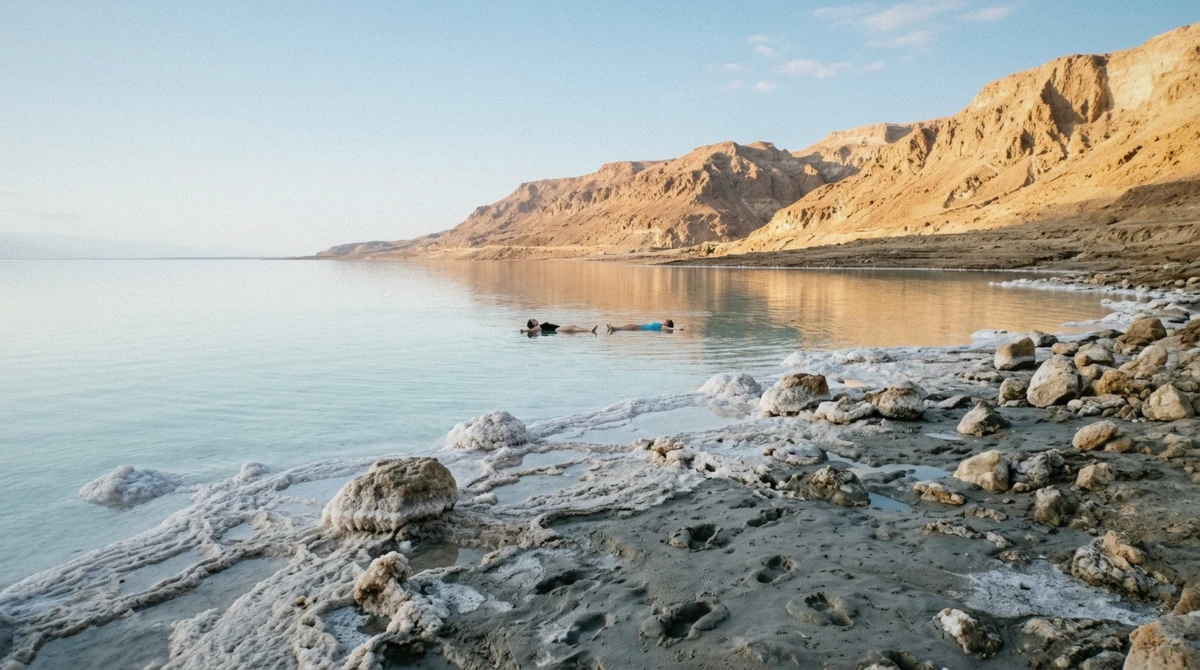
Illustrative image of a spring morning on the western shore.
Quick answer Best months, the month to avoid, and the best hour of the day
The best time to visit the Dead Sea is March and April or October and November, when highs run from 24.5°C (76°F) to 31.5°C (89°F) and the whole day stays comfortable. The water is about 34.2% salt and so dense that floating works in every month of the year. Winter from December to February is mild, with highs around 19°C to 21°C (66°F to 70°F), and it is the easiest season for climbing the Snake Path at Masada. June to August brings highs of 36°C to 38°C (98°F to 101°F), so trips that run then leave early and cut the sun exposure. Whatever the month, aim for the morning.
Key takeaways
- Best window: March to April and October to November, when highs stay between 24.5°C (76°F) and 31.5°C (89°F), like the Dead Sea Half-Day Beach Trip from Jerusalem.
- Runner-up: December to February, mild and good for hiking, though the water feels cool on entry.
- Avoid June to August unless you take an early start, when highs reach 38°C (101°F) and midday shore time is harsh.
- The water is about 9.6 times as salty as the ocean, so you float in any month and the season never changes the buoyancy.
- Best time of day is early morning, which is why the Masada sunrise, Ein Gedi and Dead Sea day leaves Jerusalem in the dark.
Best Time by Traveller Type
If You want the classic float-and-Masada day
Book March to April or October to November and take the Masada and Dead Sea Full-Day Tour from Tel Aviv with Hotel Pickup, which uses the cable car so no climb is needed.
If You are travelling with children
Pick December to February or the shoulder months and keep shore time short, since the water stings cuts and sessions of 15 to 20 minutes are the usual advice.
If You are on a budget
Summer works if you book the cheapest early-start option, such as the half-day beach trip from Jerusalem at $50, but only if you can handle the heat.
If You want the Masada sunrise
Go December to February or in the shoulder months, because the Snake Path climb asks for moderate fitness and is far kinder below 25°C (77°F).
If You are coming from Amman
Any month works for a resort day like the Full-Day Dead Sea Trip from Amman with Optional Resort Entry and Lunch, since you can use the pools and shade when the shore gets hot.
Seasons at a Glance
Month by Month
The Dead Sea sits about 440 m (1,443 ft) below sea level, the lowest land on Earth, and it is a desert shore. Tours run in every month. Use the verdict column to scan for your window, where the figure in brackets is the average low for sleeping and early starts.
The figures below come from the site's own climate dataset for the southern basin near Ein Bokek, the hotel strip most tours use, averaged over 25 years of daily data. Verdicts are for a general visitor planning a float, and possibly Masada, on a day trip.
| Month | Avg high | Avg low | Floating and Masada | Verdict |
|---|---|---|---|---|
| January | 19.3°C (67°F) | 13.0°C (55°F) | Cool air, bracing float, easy walking | Mild and quiet |
| February | 20.6°C (69°F) | 13.6°C (56°F) | Pleasant hikes, cool mornings | Mild and quiet |
| March | 24.5°C (76°F) | 15.9°C (61°F) | Warm days, kind to hikers | Best overall |
| April | 29.3°C (85°F) | 19.2°C (67°F) | Warm shore, good before summer | Best overall |
| May | 33.4°C (92°F) | 22.6°C (73°F) | Hot by midday, mornings only | Hot, go early |
| June | 36.4°C (98°F) | 25.1°C (77°F) | Harsh midday sun, short floats | Very hot, book early starts |
| July | 38.3°C (101°F) | 27.0°C (81°F) | Hottest month, shade essential | Hottest month |
| August | 38.1°C (101°F) | 27.3°C (81°F) | Same heat as July | Hottest month |
| September | 35.5°C (96°F) | 25.8°C (78°F) | Easing but still fierce at noon | Hot, go early |
| October | 31.5°C (89°F) | 23.4°C (74°F) | Warm water and comfortable evenings | Best overall |
| November | 26.0°C (79°F) | 19.2°C (67°F) | Soft light, easy walking | Best overall |
| December | 21.1°C (70°F) | 15.0°C (59°F) | Cool but sunny, great for Masada | Mild and quiet |
Reading the table
March to April and October to November are the strongest all-round months, because the whole day stays usable and the Masada climb is not punishing. January and February are genuinely pleasant if you dislike heat, with the trade-off that the water feels cold when you first get in. July and August are only worth it with an early start and a plan for shade.
The Best Month If You Only Have One Morning
Ranked shortlist for travellers with a single morning free:
- March: warm but not hot, ideal for combining Masada with the sea
- November: soft light, comfortable walking and warm water
- April: warmer water than March, still fine before noon
- January: cool and clear, the easiest month for the Snake Path
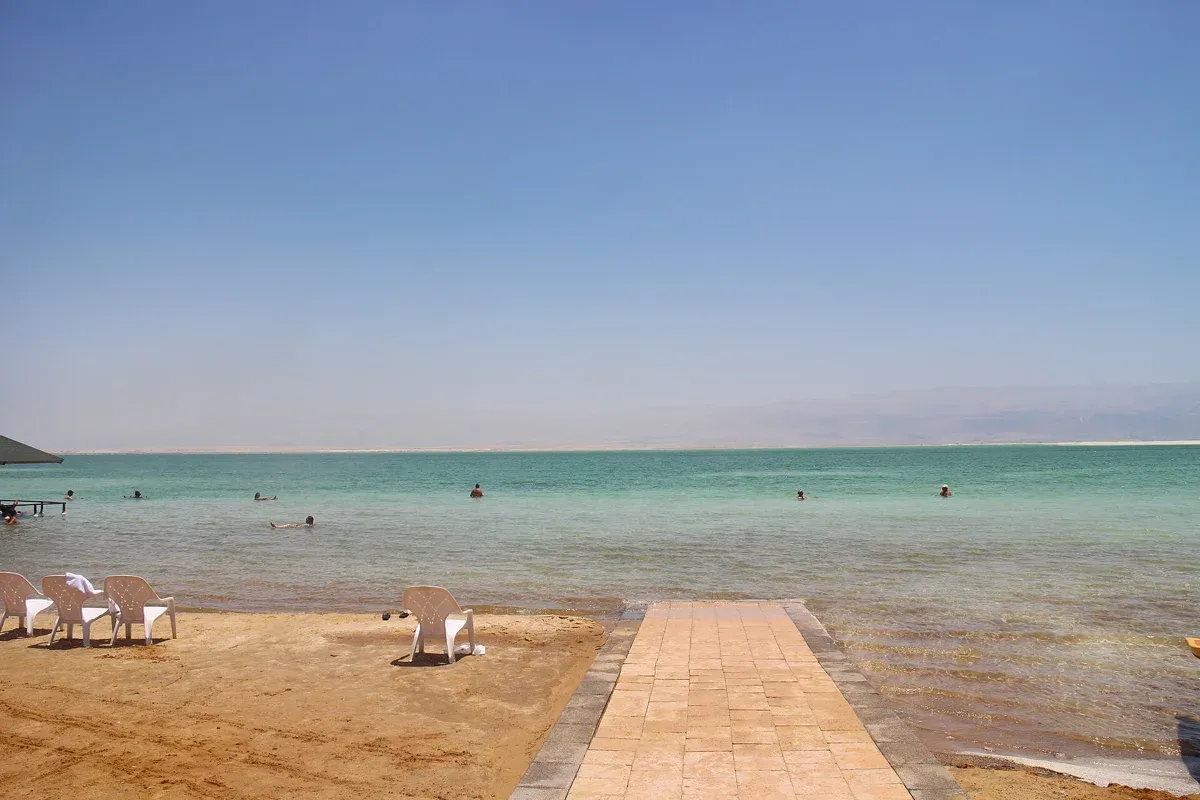
Ein Bokek beach on the western shore. Photo: Suicasmo, CC BY-SA 4.0, via Wikimedia Commons.
Mild Winter (December to February): Cool Air, Easy Climbs
Winter is the season people misjudge. Highs of 19.3°C to 21.1°C (67°F to 70°F) sound cool until you remember this is a desert basin with bright sun, and it is perfect walking weather. The float itself is bracing, so keep sessions short and rinse off in the fresh-water showers.
It is the kindest season for the Snake Path, which the Masada Sunrise Hike, Ein Gedi and Dead Sea Tour from Jerusalem climbs in the dark before dawn.
- Highs 19°C to 21°C (66°F to 70°F), lows near 13°C to 15°C (55°F to 59°F)
Comfortable Spring (March and April): Warm Water, Long Days
Spring is the sweet spot. Highs of 24.5°C (76°F) in March and 29.3°C (85°F) in April mean you can float, cover yourself in mud and still walk around Masada without suffering.
- Highs 24.5°C to 29.3°C (76°F to 85°F), lows 15.9°C to 19.2°C (61°F to 67°F)
- A coach day like the Masada and Dead Sea Full-Day Tour from Jerusalem with Hotel Pickup fits the season well
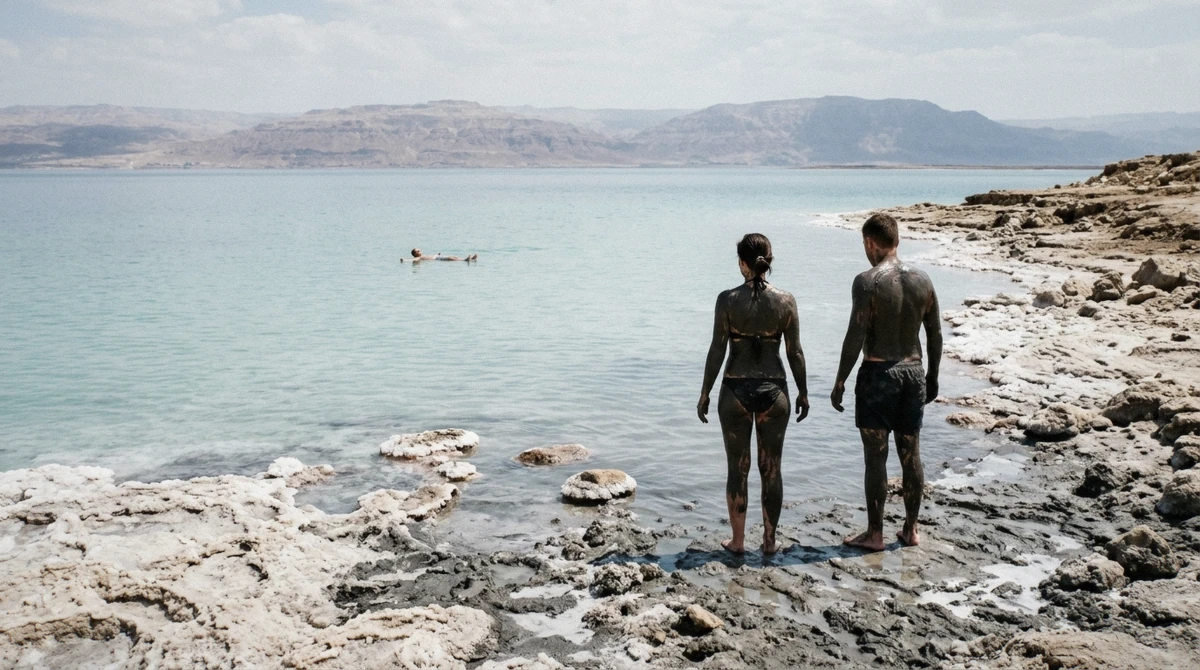
Illustrative image of a sunny day on the salt-crusted shore.
Hot May and September: Warm Sea, Early Starts
May at 33.4°C (92°F) and September at 35.5°C (96°F) are transition months. The water is at its most inviting and the evenings are warm, but the middle of the day is harsh on bare skin. Half-day formats shine here, because the Dead Sea Half-Day Beach Trip from Jerusalem leaves before the hottest hours and gives you about 2 hours 45 minutes at Kalia Beach.
- Highs 33.4°C to 35.5°C (92°F to 96°F), lows around 22.6°C to 25.8°C (73°F to 78°F)
Very Hot Summer (June to August): Float at Dawn or Not at All
Highs of 36.4°C to 38.3°C (98°F to 101°F) with lows that never drop below 25°C (77°F) make midday shore time genuinely hard. The sun reflects off pale salt ground, so shade is scarce and sunscreen alone is not enough. If summer is your only window, take an early departure, float for short spells, drink at least 2 litres of water and spend the middle of the day at a resort pool under shade.
Jordan-side resort days handle this best.
- Highs 36.4°C to 38.3°C (98°F to 101°F), lows 25.1°C to 27.3°C (77°F to 81°F)
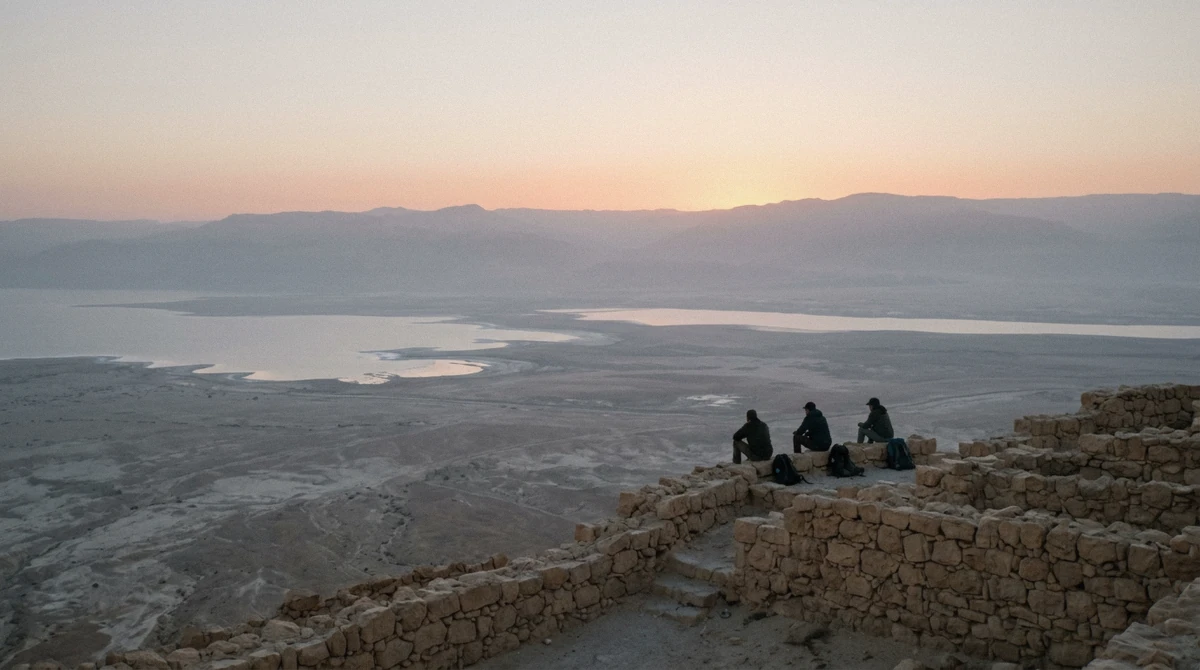
Illustrative image of sunrise from Masada.
Shoulder Autumn (October and November): Warm Water, Soft Light
October at 31.5°C (89°F) and November at 26.0°C (79°F) match spring for comfort. Evenings are mild and the light late in the day suits the mountains above the western shore.
- Highs 26.0°C to 31.5°C (79°F to 89°F), lows 19.2°C to 23.4°C (67°F to 74°F)
- From Amman, the Madaba, Mount Nebo, Baptism Site and Dead Sea Tour from Amman pairs sightseeing with a warm-water float
The Worst Time to Visit (Honestly)
July and August between about 11:00 and 16:00 are the hardest hours of the year at the Dead Sea. Walking on hot salt ground with little shade is draining. A resort day works for heat-hardy travellers because of pools and shade, but small children, older visitors and anyone with heart problems should not plan midday shore time in these months.
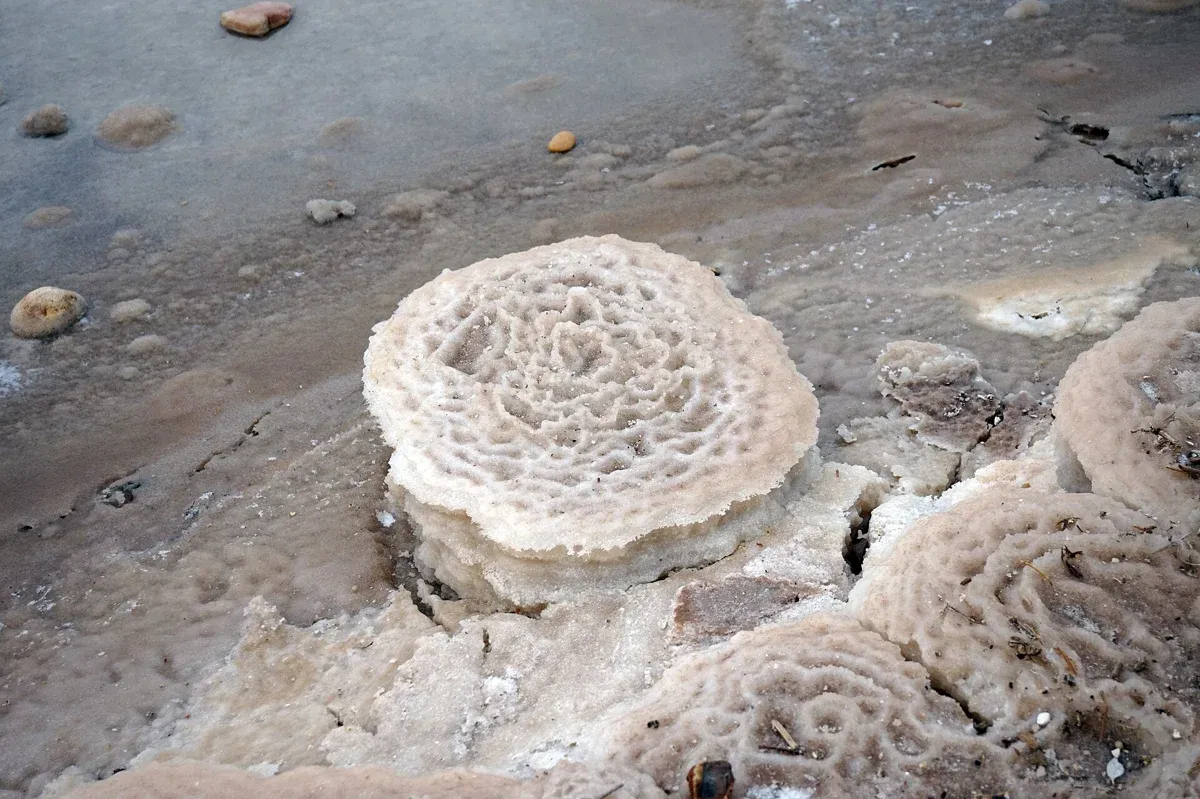
A salt formation in the shallows of the Dead Sea. Photo: Tiia Monto, CC BY-SA 3.0, via Wikimedia Commons.
Which Trip Fits Which Season
The season changes which kind of Dead Sea day makes sense more than it changes the float. The table matches each trip compared here to the months it suits best, using the listing details and the average highs above.
| Trip | Best months | Why |
|---|---|---|
| Masada and Dead Sea Full-Day Tour from Tel Aviv with Hotel Pickup | October to April | About 2 hours on an open plateau, easier below 30°C (86°F) |
| Masada and Dead Sea Full-Day Tour from Jerusalem with Hotel Pickup | October to April | Same fortress walk, a shorter drive |
| Masada Sunrise Hike, Ein Gedi and Dead Sea Tour from Jerusalem | All year, coolest December to February | The climb is before dawn, the Ein Gedi walk follows in the morning |
| Dead Sea Half-Day Beach Trip from Jerusalem | All year | Leaves before the hottest part of the day, back after about 5 hours |
| Bethlehem and Dead Sea Day Tour from Jerusalem | October to May | Church visits in modest dress are easier when it is not too hot |
| Full-Day Dead Sea Trip from Amman with Optional Resort Entry and Lunch | All year | About 6 hours at a hotel with pools and shade |
| Petra, Wadi Rum and Dead Sea 2-Day Tour from Amman | October to April | A fair amount of walking in the sun at Petra |
If your dates are fixed in summer
Pick a format that keeps you out of the midday sun: the half day from Jerusalem, the sunrise hike, or a resort day from Amman with pools and shade. Float in short sessions of 15 to 20 minutes, rinse in fresh water, and drink at least 2 litres of water. The coach days with Masada still run in summer, but the time on the plateau falls in the late morning, so carry a hat and water up with you.
Planning the Hours of a Hot Day
From May to September the shore heats up fast after sunrise. A few habits make a summer or shoulder-season visit comfortable, whichever trip you book.
- Float first, sightsee later, or pick a trip that reaches the water early
- Use the beach showers between floats to cool down as well as to rinse
- Sit in shade between sessions, and bring a hat for every outdoor stop
- Drink before you feel thirsty, the dry air hides how much you sweat
- Keep children and anyone with heart problems out of the midday sun
In winter the logic flips. The warmest hours are early afternoon, so a late-morning float on a coach day is pleasant, and the cool mornings suit the climb up Masada. For a packing list that changes with the season, see what to bring to the Dead Sea.
Between December and February a light layer for the morning drive and the top of Masada is worth packing, since lows sit around 13°C to 15°C (55°F to 59°F) and the wind on the plateau can feel cooler than the beach below.
Best Time of Day
Morning wins in every month. The sun is low, the air is coolest. It is no accident that the half-day trip from Jerusalem leaves before the hottest part of the day, and that sunrise departures from Jerusalem exist at all.
The listings compared here show the pattern clearly.
| Slot | What it suits | Typical trip |
|---|---|---|
| Before dawn | Snake Path climb and sunrise from Masada | Sunrise hike and Ein Gedi day |
| Early morning | Comfortable floating and the shortest heat | Half-day beach trip from Jerusalem |
| Late morning to afternoon | Resort pools and shade, or cable-car Masada days | Full-day coach tours from Tel Aviv and Jerusalem |
If your only option is an afternoon visit in summer, pick a spot with shade and a pool rather than an open public beach. In winter, afternoons are fine and often the warmest part of the day.
So, When Should You Go?
Go in March, April, October or November for the best all-round conditions, with highs between 24.5°C (76°F) and 31.5°C (89°F) and a full usable day. Choose December to February if you want cool air, quiet shores and an easy Masada climb, accepting a bracing first few minutes in the water. Reserve June to August for early starts and resort shade, and never plan a midday float then if you can avoid it.
Whenever you go, take the morning slot and carry water, a hat and flip-flops for the sharp salt crystals. Current rates for every trip are on the Dead Sea tour prices page.
Questions and Answers
What is the best month to visit the Dead Sea?
March and April, and October and November, are the best months, with highs between 24.5°C (76°F) and 31.5°C (89°F). The whole day stays comfortable for floating, mud baths and Masada. See the month-by-month table above for details.
Is the Dead Sea too hot in summer?
From June to August, highs reach 36.4°C to 38.3°C (98°F to 101°F), which is genuinely harsh between late morning and late afternoon. It is workable if you take an early-start trip, float in short sessions and use shade and pools. Many travellers simply avoid midday shore time.
Can you swim in the Dead Sea in winter?
Yes, you can float in every month, and winter highs of 19.3°C to 21.1°C (67°F to 70°F) with bright sun make it pleasant. The water feels cool on entry, so keep the first session to 15 to 20 minutes and rinse in the fresh-water showers. For more on what a visit actually involves, read is the Dead Sea worth visiting.
What time of day is best for the Dead Sea?
Morning is best in every season, when the sun is low and the air is coolest. Most half-day trips leave Jerusalem before the hottest hours for this reason. In winter, late morning through the afternoon is also comfortable.
When is the best time to climb Masada?
At sunrise, or on a cool winter morning. The Snake Path climb asks for moderate fitness and is far easier below 25°C (77°F), so December to February suit it best. If you would rather not climb at all, the coach tours include the round-trip cable car, and you can weigh the options in Masada cable car or Snake Path.
Does it rain at the Dead Sea?
Barely. The north of the sea gets about 100 mm (4 in) of rain a year and the south about 50 mm (2 in), so showers are rarely a planning factor. The sun, not the rain, is what you plan around, and a hat and sunscreen matter in every month.