 Dead Sea Tours
What to Bring to the Dead Sea: The Complete Packing List
What to bring to the Dead Sea comes down to a short list: water shoes or strapped sandals, a dark swimsuit, a towel, high-SPF sunscreen, a sun hat, sunglasses, at least 2 litres of water and your passport. The trips compared here handle the heavy lifting. Coach transport, guided Masada visits and beach access are in the price on most days, and some Jordan resort options include towels and lockers. What stays on your list is mostly sun protection and footwear, because the shore is salt, rock and glare. The sea sits about 440 m (1,443 ft) below sea level and the July afternoon high averages 38°C (101°F) near Ein Bokek, so the sun is serious even on a half-day visit. This page covers what to wear, what to pack, what each listing provides, what the extras cost, and what to leave behind. If you have not booked yet, browse the Dead Sea tours catalog first, then pack to the trip you picked.
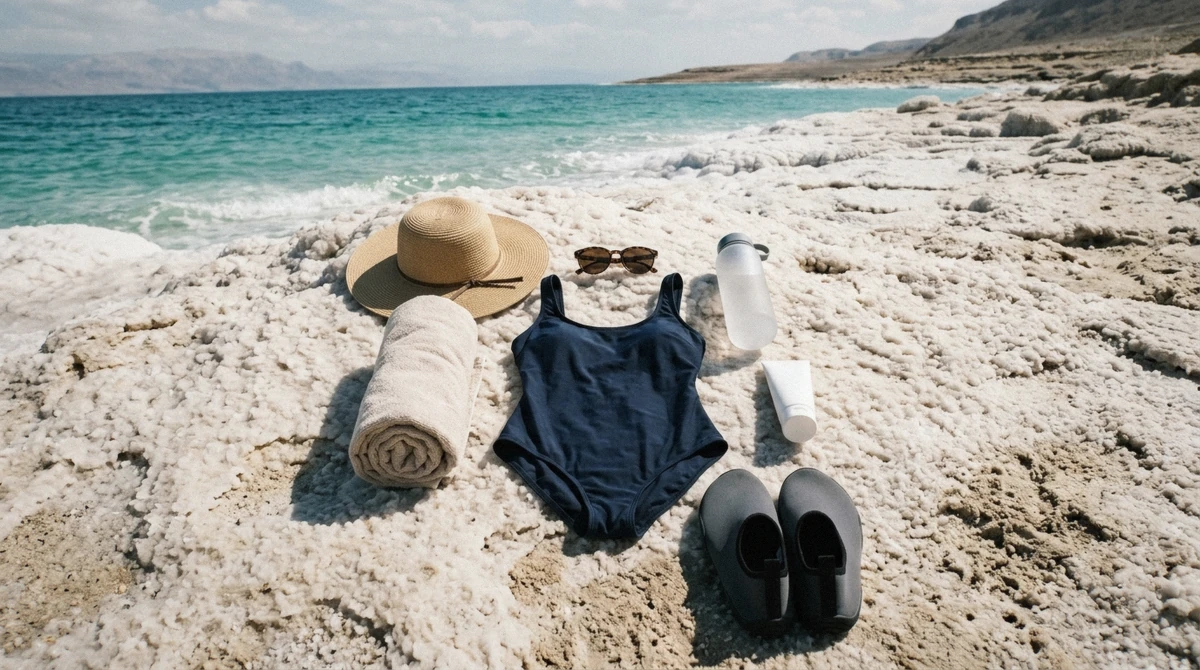
Illustrative image of a Dead Sea packing list.
Quick answer The short bring-list for a Dead Sea day trip, plus what tours provide and what stays home
Bring water shoes or strapped sandals, a dark swimsuit you do not mind marking, a towel, high-SPF sunscreen, a hat, sunglasses and at least 2 litres of water. Bring your passport on every Israel-side trip, some listings accept a copy. Add modest clothes that cover shoulders and knees if your day includes the Bethlehem churches, and proper hiking shoes if it includes the Snake Path or Ein Gedi. Leave jewellery at home and do not shave the day before, because the salt stings freshly shaved skin. Towels are the most common trap: the Jordan resort trips provide them, but the sunrise hike and the half-day beach trip from Jerusalem charge 15 ILS ($4.83) to rent one, and the Bethlehem trip includes none.
Key takeaways
- The Masada coach days include Masada entry, the cable car and the beach fee, so you bring gear, not cash for tickets, as on the Masada and Dead Sea Full-Day Tour from Tel Aviv with Hotel Pickup.
- Water shoes or strapped sandals are the single most useful item, since the salt crystals on the shore are sharp enough to cut bare feet.
- Never bring jewellery and never shave the day before you float, the salt finds both.
- The beach days need the least cash: the Dead Sea Half-Day Beach Trip from Jerusalem includes the Kalia Beach entry, so your money goes on lunch and a towel rental if you did not pack one.
- For footwear beyond the beach, the sunrise day needs real hiking shoes for the Masada Sunrise Hike, Ein Gedi and Dead Sea Tour from Jerusalem, which climbs the Snake Path in the dark.
What to pack, by the trip you booked
If You booked a coach day with Masada from Tel Aviv or Jerusalem
Pack light and bring a passport, swimwear, a towel, sunscreen, a hat, sunglasses and flip-flops, exactly what the listing asks for on the Masada and Dead Sea Full-Day Tour from Jerusalem with Hotel Pickup.
If You booked the sunrise hike with Ein Gedi
Bring hiking shoes, water, a sun hat, swimwear, sunscreen and flip-flops, and carry cash for the Masada entry of 37 ILS ($11.92) and the Ein Gedi entry of 31 ILS ($9.99), both paid on the day.
If You booked the half-day beach trip from Jerusalem
Bring swimwear, a hat, sunscreen, water and flip-flops, and pack your own towel or plan to rent one for 15 ILS ($4.83) at the meeting point.
If You booked the Bethlehem and Dead Sea combination
Pack two outfits in one bag, modest clothes with covered shoulders and knees for the churches, plus swimwear, sandals, sunscreen and your own towel, since towels, lockers and beach facilities are all extras on the Bethlehem and Dead Sea Day Tour from Jerusalem.
If You booked a day from Amman
The resort options provide towels, lockers and showers, so bring a passport or ID card, swimwear, sunscreen, a hat and sunglasses, and check whether your option includes resort entry or whether you pay for it separately, as on the Full-Day Dead Sea Trip from Amman with Optional Resort Entry and Lunch.
Why the Dead Sea punishes bad packing
The Dead Sea is not a normal swim. The water is about 34.2% salt, roughly 9.6 times saltier than the ocean, so you float whether you try to or not. That same salt forms crystals along the waterline, and the crystals are sharp.
Bare feet walking in and out get cut, and the salt then stings every cut.
The shore is also shadeless. Rainfall is barely 100 mm (4 in) a year in the north and about half that in the south, so there is almost nothing between you and the sky. Summer afternoon highs average 38°C (101°F) in July and August, and even the mild months bring strong glare off the water.
Everything on this list exists for one of two reasons: the salt or the sun.
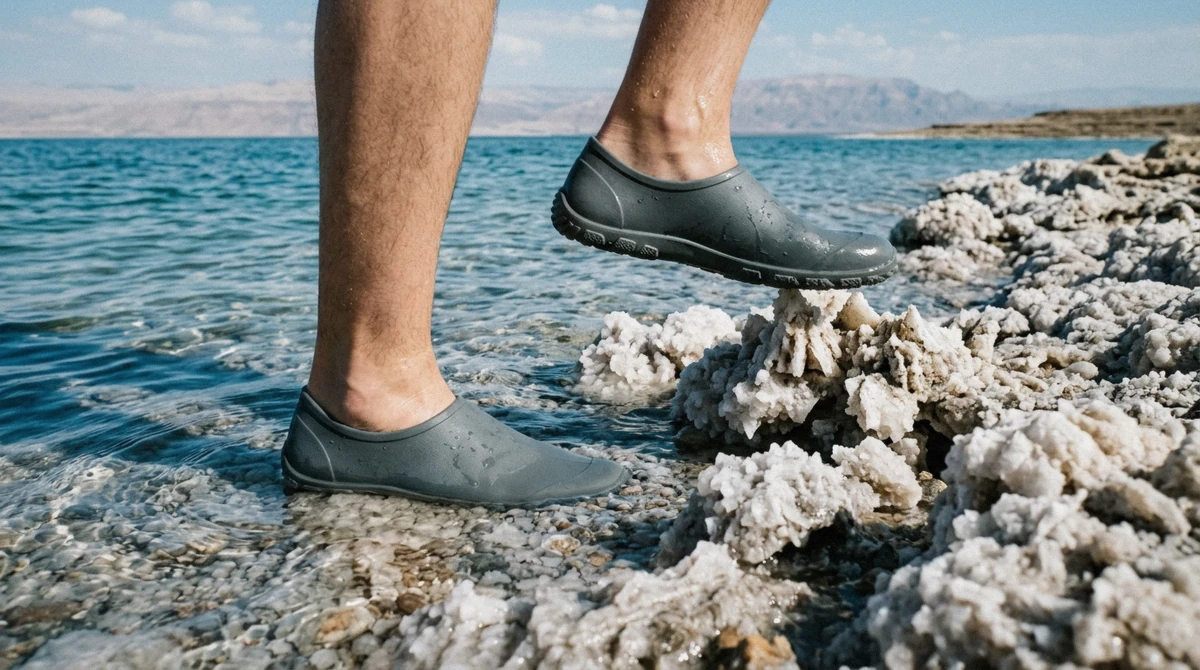
Illustrative image of water shoes on the salt.
What to wear at the Dead Sea
Swimwear
Wear a dark swimsuit you do not mind marking. The mineral mud that people smear on themselves at the shore can leave stains, and a pale suit shows every one of them. An older or darker suit also handles the repeated fresh-water rinses better.
Cover-ups over the swimsuit are a good idea for the coach and any stops that are not the beach.
Sun protection
A wide-brimmed hat, sunglasses and high-SPF sunscreen are standard on every listing's bring-list. Apply sunscreen before you get in the water and let it dry, and keep it away from your eyes, which will already be fighting the salt in the air. A light long-sleeved shirt for the coach and for walking stops is worth the space in the bag.
Footwear
Footwear is the item people most often get wrong. Water shoes or strapped sandals are the default recommendation, because salt crystals on the shore are sharp. Flip-flops are accepted by most listings but fall off on wet rock and offer no protection over the arch.
Trainers work for the walking stops but you do not want them soaked in salt water. Bare feet are fine on soft sand only, and on a Dead Sea shore they are the fastest route to a cut. Heels and unsecured sandals are the worst option of all.
Dress code for Bethlehem
If your day includes the Bethlehem churches, the listing asks for modest dress with covered shoulders and knees. That means long trousers or a long skirt and a shirt with sleeves, plus swimwear in the same bag for the sea afterwards.
This table matches a colour or fabric choice to the reality of the shore, where the two hazards are glare off the water and the salt and mud you will be sitting in.
| Colour or fabric | Good at the Dead Sea? | Why |
|---|---|---|
| Dark swimsuit | Yes | Mud and salt marks do not show |
| White clothing | Mixed | Cool in the heat but shows every mud smear |
| Black clothing | Mixed | Hides marks but absorbs heat under a 38°C (101°F) sun |
| Quick-dry synthetic | Yes | Rinses of salt and dries fast between stops |
| Cotton | No | Stays wet and heavy after the fresh-water rinse |
| Modest long layers | Yes | Required at the Bethlehem churches |
Shoes for the walking parts
Some trips here need more than beach sandals. The sunrise day climbs the Snake Path up Masada in the dark and needs moderate fitness and proper hiking shoes, a route covered in more detail in Masada cable car or Snake Path. The same trip walks the Ein Gedi Nature Reserve, where springs and waterfalls mean wet, uneven ground.
The coach days use the cable car, so ordinary comfortable shoes are enough there.
What to bring to the Dead Sea: the checklist
This is the complete packing list, item by item. The listings repeat parts of it in their own notes, so treat it as the baseline and add trip-specific pieces from the sections above.
- Water shoes or strapped sandals, because salt crystals are sharp
- Dark swimsuit, because mud marks pale fabric
- Towel, because some trips charge 15 ILS ($4.83) to rent one
- High-SPF sunscreen, because the shore has no shade
- Sun hat, because the sun is direct most of the day
- Sunglasses, because glare off the water is constant
- At least 2 litres of water, because heat plus salt dehydrates fast
- Passport, because every Israel-side listing asks for it
- Modest clothes, for the Bethlehem churches
- Hiking shoes, for the Snake Path and Ein Gedi
- Cash or card, for park fees, lunch and tips
- Change of clothes, for the coach ride home
Water
Bring at least 2 litres per person. The listings on the Jordan side include bottled water in the car, and the Bethlehem day includes one bottle, which is not enough for a 10-hour day in this heat.
Money
Bring cash or card for the things not in the fare: the Masada entry of 37 ILS ($11.92) and Ein Gedi entry of 31 ILS ($9.99) on the sunrise day, the 45 NIS ($14.50) beach fee on the Bethlehem day, towel rentals, lunch stops and tips. Small notes are easier at kiosks and stalls.
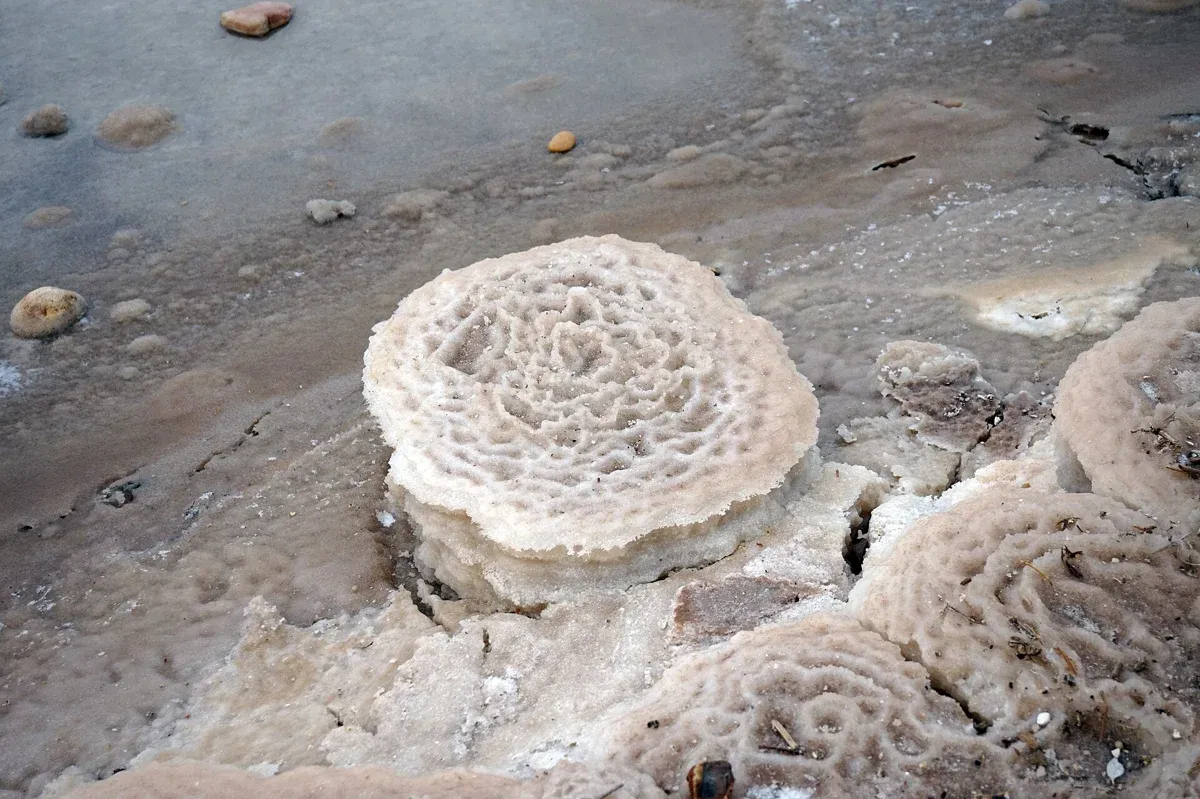
A salt formation in the shallows of the Dead Sea. Photo: Tiia Monto, CC BY-SA 3.0, via Wikimedia Commons.
What the tours provide, so you do not overpack
The table below compares what each listing actually includes against what stays on your list. It is where the trips differ most, and the differences decide how much bag and how much cash you carry. All figures come from the listings themselves.
| Item | Provided | Bring or pay your own | Notes |
|---|---|---|---|
| Beach entry | Included on most Israel-side days | 45 NIS ($14.50) on the Bethlehem day, paid on the day | The Bethlehem listing excludes entry, towels, lockers and facilities |
| Masada entry and cable car | Included on both coach days | 37 ILS ($11.92) entry on the sunrise day, no cable car on that trip | The Tel Aviv coach includes Masada entry, cable car and the beach fee |
| Ein Gedi entry | Not included | 31 ILS ($9.99) on the sunrise day | Only the sunrise day visits Ein Gedi |
| Towel | At the Jordan resorts | 15 ILS ($4.83) rental on the sunrise and half-day trips | Rentals are at the meeting point on Ha-Nevi'im St in Jerusalem |
| Lockers and showers | At the Jordan resorts | Not available to the Bethlehem group | The Bethlehem listing flags beach facilities as an extra |
| Transport | Always included | Nothing | Every listing includes air-conditioned transport from Tel Aviv, Jerusalem or Amman |
| Water | Bottled water in the cars from Amman, one bottle on the Bethlehem day | Your own 2 litres or more | Israel-side coach days list food and drinks as not included |
| Lunch | Optional at the Jordan resorts | Extra fee at the Qumran stop on the coach days | The 2-day Petra listing includes resort lunch on the guided group option |
The practical takeaway is that the coach days are the lightest to pack for and the cheapest on the day, since the big tickets are already paid. DeadSeaTours.org lists every inclusion in each trip's page, so check the one you booked before you decide what to carry.
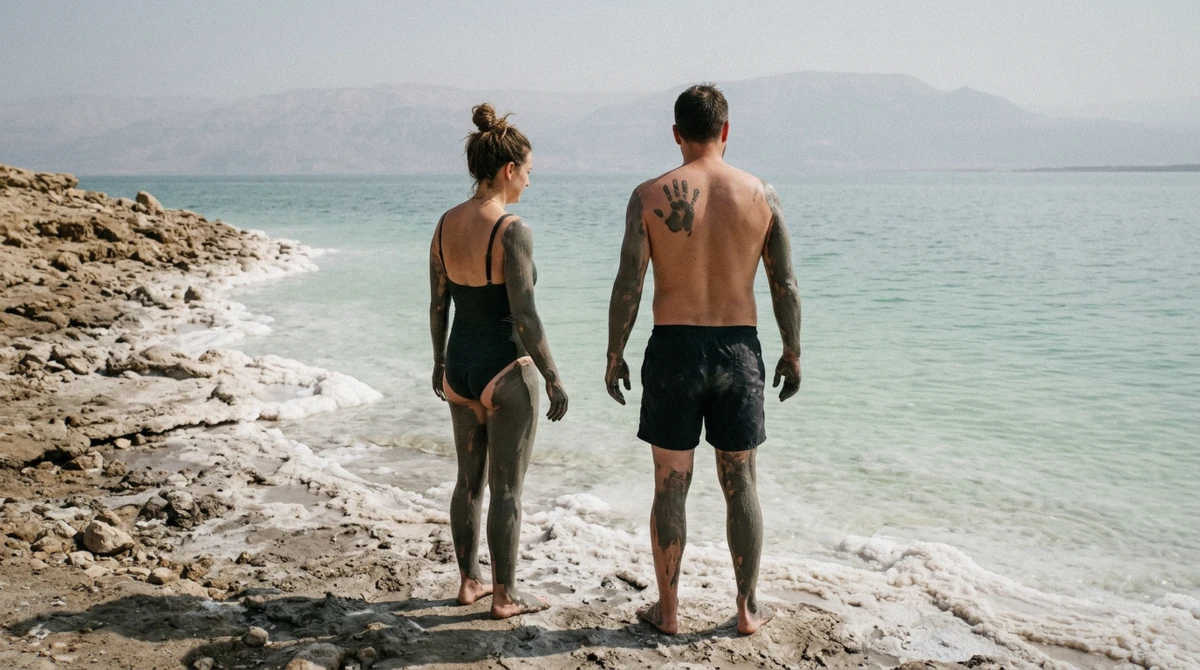
Illustrative image of a mud bath on the shore.
What not to bring to the Dead Sea
The leave-at-home list matters as much as the packing list. The salt is aggressive and the rules are strict on a few points.
- Jewellery, leave it at the hotel, it is easily lost and the salt attacks metal
- Do not shave the day before, freshly shaved skin stings badly in the water
- Do not put your face under, keep the water out of your eyes and mouth
- No diving, the water is for floating only
- Fragile or non-waterproof bags, mud gets everywhere
The floating rules come from the operators and the standard advice: walk in, lean back and lie on the surface. Keep sessions to 15 to 20 minutes, then rinse in the fresh-water showers at the beach. The mineral mud on the shore is used for mud baths and several listings mention it, but apply it away from your face.
If you are weighing the trip itself, the honest case is in is the Dead Sea worth visiting.
Packing by season
What to bring to the Dead Sea shifts with the month more than most destinations, because the basin runs from pleasant winter days to extreme summer heat. Average highs at the southern basin come from 25 years of climate records.
| Season | Months | Average highs | What to pack |
|---|---|---|---|
| Cool season | December to February | 19°C to 21°C (66°F to 70°F) | A light layer over swimwear for the morning, everything else unchanged |
| Peak season | March to April and October to November | 24°C to 32°C (75°F to 90°F) | The standard list, plus a hat and sunscreen you reapply |
| Hot shoulder | May and September | 33°C to 36°C (91°F to 97°F) | Extra water, swim earlier in the day, seek the shade at lunch |
| Extreme heat | June to August | 36°C to 38°C (97°F to 101°F) | Maximum water, strongest sunscreen, this is why half-day trips leave before the hottest hours |
Month-by-month detail on timing is in best time to visit the Dead Sea. Winter mornings can be cool enough that you want a fleece on the coach, while the water stays usable all year.
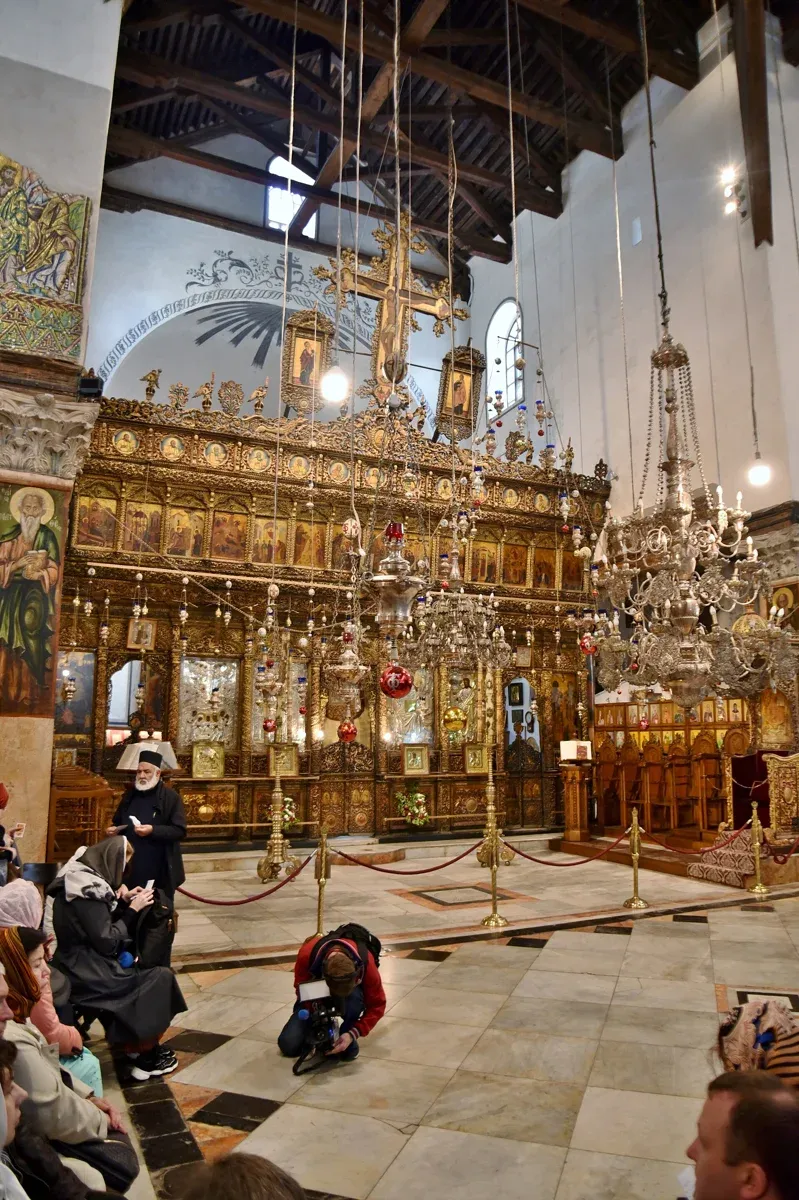
Inside the Church of the Nativity, Bethlehem. Photo: Bahnfrend, CC BY-SA 4.0, via Wikimedia Commons.
One bag for two places: the Bethlehem day
The Bethlehem and Dead Sea combination is the trickiest packing problem in the catalog, because it mixes a dress-code venue with a beach in one day. The solution is layers that come off. Wear the modest outfit, long trousers or a long skirt, covered shoulders and closed sandals, for the Milk Grotto, the Church of the Nativity and the Shepherds' Field chapel.
Swimwear, a dark one, a towel and flip-flops sit in the bottom of the bag and come out for the roughly 2 hours at the sea.
Pack the change of clothes you will want for the drive back, since the listing excludes towels, lockers and beach facilities, so there is nowhere to dry or store anything unless you bring it. One bag is enough if you pack it in reverse order, swim things on top.
Documents, borders and fees
Bring your passport on every Israel-side trip, the listings ask for it, and the sunrise and half-day trips accept a copy. The Bethlehem day needs a valid passport and an Israeli visa, and Israeli passport holders cannot join it under Israeli law, so check your documents before booking.
The trips from Amman stay inside Jordan and do not cross the border, and one Amman listing asks for a passport or ID card. Jordan has no public beach on the sea, so the days from Amman use hotel or resort access, such as the Holiday Inn or Crowne Plaza Dead Sea. The 2-day Petra listing recommends buying the Jordan Pass before arrival, and its rules are covered in Dead Sea Israel or Jordan.
Packing for families
Families packing for the shore need the same list, sized down. Water shoes for children matter even more than for adults, since kids run along the waterline where the crystals are thickest. Note the age rules before booking, the coach days from Tel Aviv and Jerusalem are not suitable for children under 4, while the Jordan resort days accept all ages with infant seats available.
The full picture is in the Dead Sea with kids.
Questions and Answers
What should I bring to the Dead Sea?
Bring water shoes or strapped sandals, a dark swimsuit, a towel, high-SPF sunscreen, a sun hat, sunglasses, at least 2 litres of water and your passport. Add modest clothes if your trip includes Bethlehem and hiking shoes if it includes the Snake Path or Ein Gedi. Carry cash or card for park fees, lunch and tips.
Do I need water shoes for the Dead Sea?
Yes, they are the most useful thing on the list. Salt crystals along the waterline are sharp and cut bare feet, and the salt then stings every cut. Sandals with a secured strap are an acceptable alternative, flip-flops are a weak one.
Should I wear a dark swimsuit in the Dead Sea?
Yes. The mineral mud people use for mud baths at the shore can stain, and a dark suit hides the marks.
Are towels provided at the Dead Sea?
It depends entirely on the trip. The Jordan resort days include towels, lockers and showers, while the sunrise hike and the half-day beach trip from Jerusalem charge 15 ILS ($4.83) to rent one at the meeting point, and the Bethlehem day includes none. Pack your own unless you are on a resort option.
Can you wear jewellery in the Dead Sea?
Leave it at the hotel. Rings and watches slip off in the water and the high salt content is hard on metal. There is nothing to gain by wearing it.
Do I need my passport for a Dead Sea tour?
Yes on every Israel-side trip, the listings ask for it and some accept a copy. The Bethlehem day requires a valid passport and an Israeli visa, and Israeli passport holders cannot join it under Israeli law. The trips from Amman stay in Jordan, and one of them asks for a passport or ID card.